
SepticRooter™
Metro Atlanta & North Georgia Septic Experts
 (678) 744-7878
(678) 744-7878
(678) 744-7878
A healthy septic system produces little to no detectable odor. Persistent or recurring sewage smell in your yard almost always signals a problem — and in most cases it's not a full tank.
(678) 744-7878
 What the Smell Actually Means
A properly functioning septic system produces little to no detectable odor at ground level. Gases from decomposition — hydrogen sulfide, methane, and others — normally vent upward through the plumbing stack on your roof. Brief odors can occur after pumping, heavy rain, or soil disturbance.
In most cases it traces to one of three things: gas escaping somewhere it shouldn't, effluent surfacing where it shouldn't, or both. Pumping the tank almost never fixes either of these.
The Most Common CausesThe most serious cause. When a drain field can no longer absorb effluent, wastewater works its way to the surface. The smell is strongest directly over the drain field area and is usually accompanied by wet or spongy ground and unusually lush grass.
Concrete tank lids crack and shift over time. A cracked or displaced lid lets gases vent directly to the surface rather than up through the roof vent. This often produces a concentrated smell near the tank location rather than spread across the drain field.
Baffles inside the tank direct flow and prevent scum from escaping. When an outlet baffle fails, solids push into the drain field; when an inlet baffle fails, gases can back-channel through the house plumbing and out at grade level.
If the roof vent stack is clogged, blocked by a bird nest, or undersized, gases back up and find the next easiest exit — often around the tank lid, inspection ports, or even back into the house.
On pressure-dosed systems, a failed pump can cause the pump chamber to overflow, releasing untreated effluent near the tank area. This produces a strong, localized smell near the control panel or tank.
Why It's Almost Never a Full TankThe instinct when anything smells or backs up is to call a pump truck. It's understandable — that's what most homeowners have been told to do.
But a full tank by itself doesn't smell at ground level. Gas from a full tank vents through the plumbing stack, not through the ground. If you're smelling sewage in the yard, the problem is structural — a crack, a failed component, surfacing effluent — not volume.
Pumping a system with a surfacing drain field will give you a few days of temporary relief and cost $600–$900. The odor will return. You'll have spent that money without identifying the real problem.
(678) 744-7878
What SepticRooter ChecksWe pull your system's as-built map from the county health department so we know exactly where the tank, distribution box, and drain field are before we dig anything.
We walk the property and look for the classic signs: wet spots, spongy ground, lush grass strips, visible effluent, and where the odor is strongest. The location tells us a lot about the cause.
We excavate the lids and inspect the tank interior — baffle condition, liquid level, scum layer, and inlet/outlet integrity. This takes about 20 minutes and reveals most structural causes.
If the field is suspect, we probe the laterals and check for surfacing or saturation. We tell you whether the field needs repair, rehabilitation, or full replacement — and what each option costs.
Good To Know




 More Homeowner Guides
Real answers to the questions Georgia homeowners ask most often.
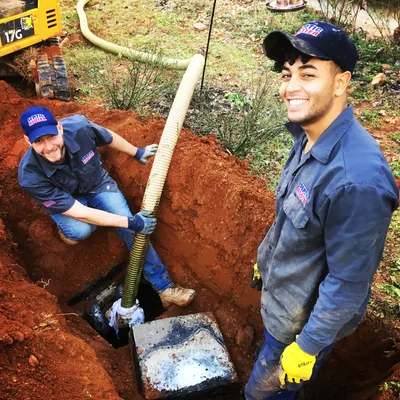
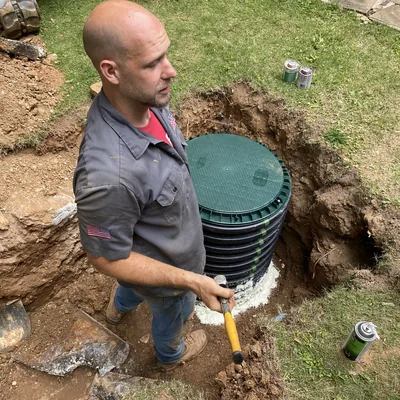
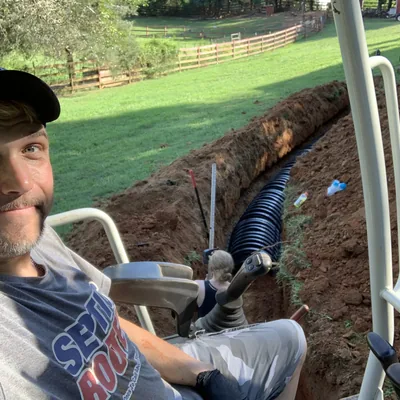
The SepticRooter Family & Crew



























Describe your situation and we'll point you in the right direction — no pressure, no runaround.
(678) 744-7878